Deer Repellent Service
Deer don't read which plants are “resistant”.
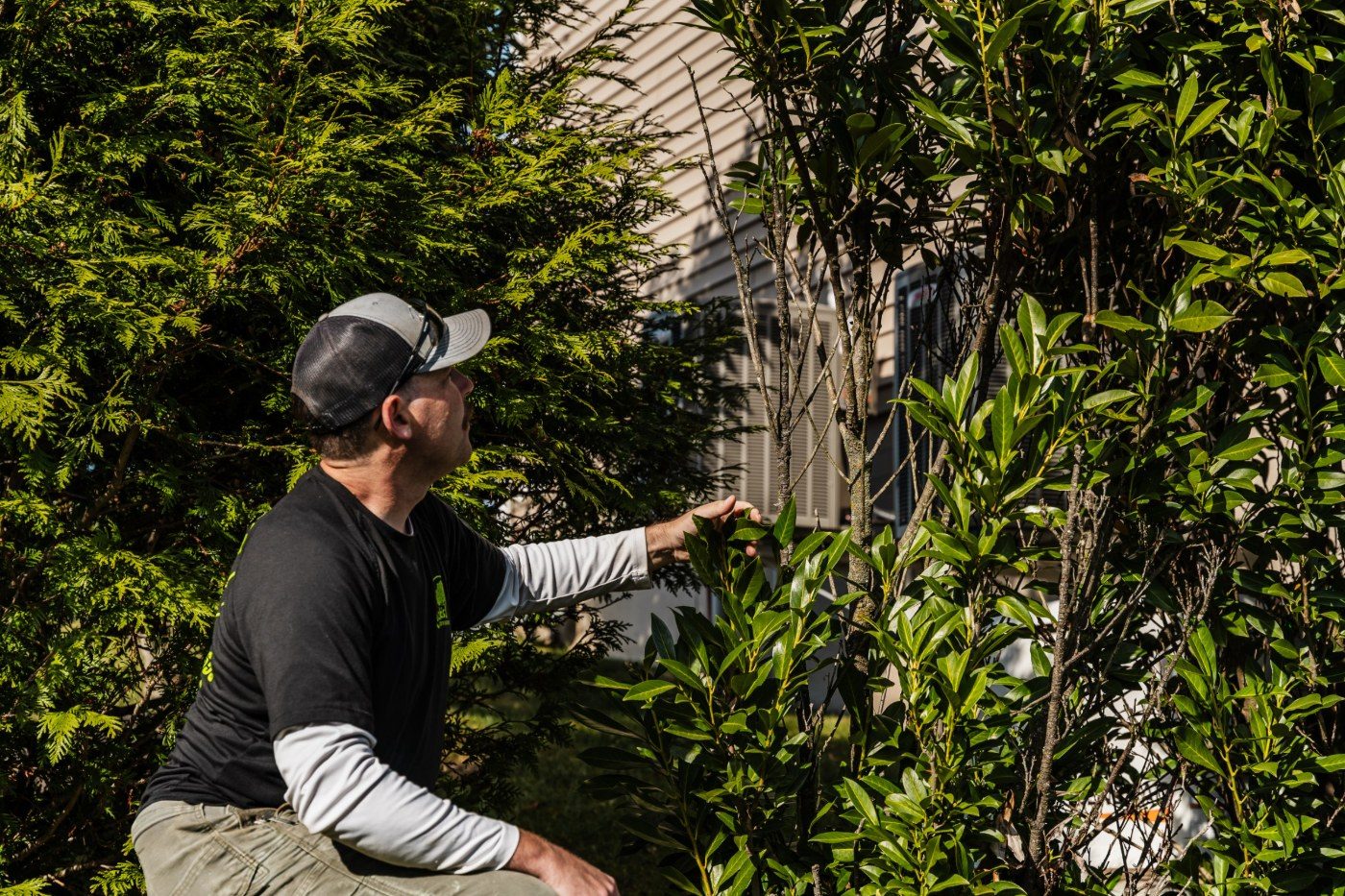
Every year homeowners in Chester, Delaware, and Montgomery Counties and northern New Castle County, DE watch deer strip the Arborvitae, Hollies, Yews, and young trees they've spent years growing. Come fall, bucks rub against smooth bark trees with their antlers, and in some cases can even kill small young trees. Deer-resistant plant lists help a little. Hardware store sprays wash off in the first rain. Our Deer Repellent Service gives your trees and shrubs real protection from both browsing and antler damage, with professional-grade repellent sprays and protective fencing timed by a Certified Arborist to when deer actually feed and rub. It's one more way we keep your landscape intact as part of a Tree Preservation Program.

Signs Deer Are Damaging Your Trees and Shrubs
Deer damage is easy to spot once you know what to look for.
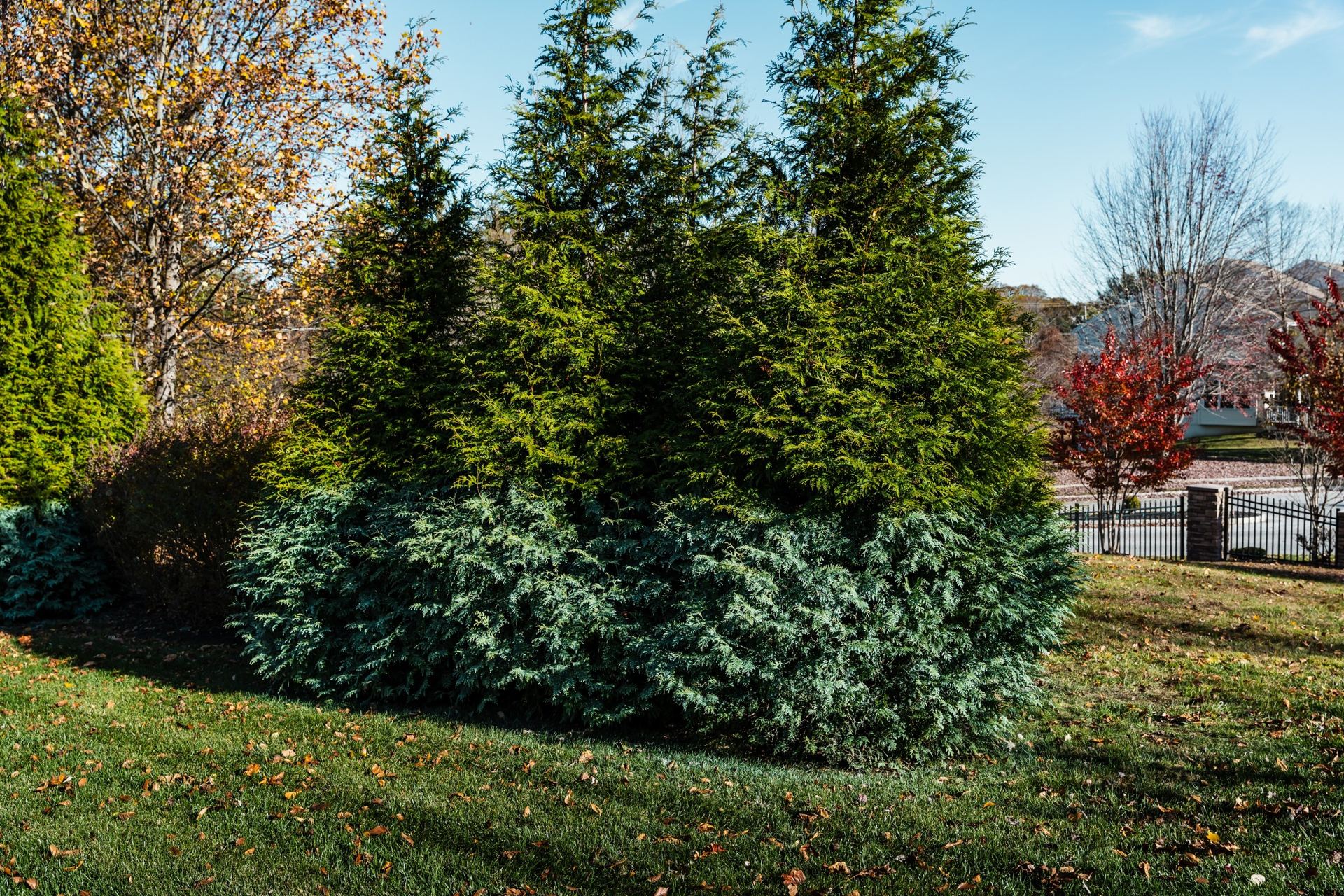
- A clean browse line where everything below four or five feet is stripped and everything above is untouched.
- Ragged, torn stems on new growth, since deer have no upper front teeth and tear instead of cut.
- Missing buds and tips on Evergreens in late winter.
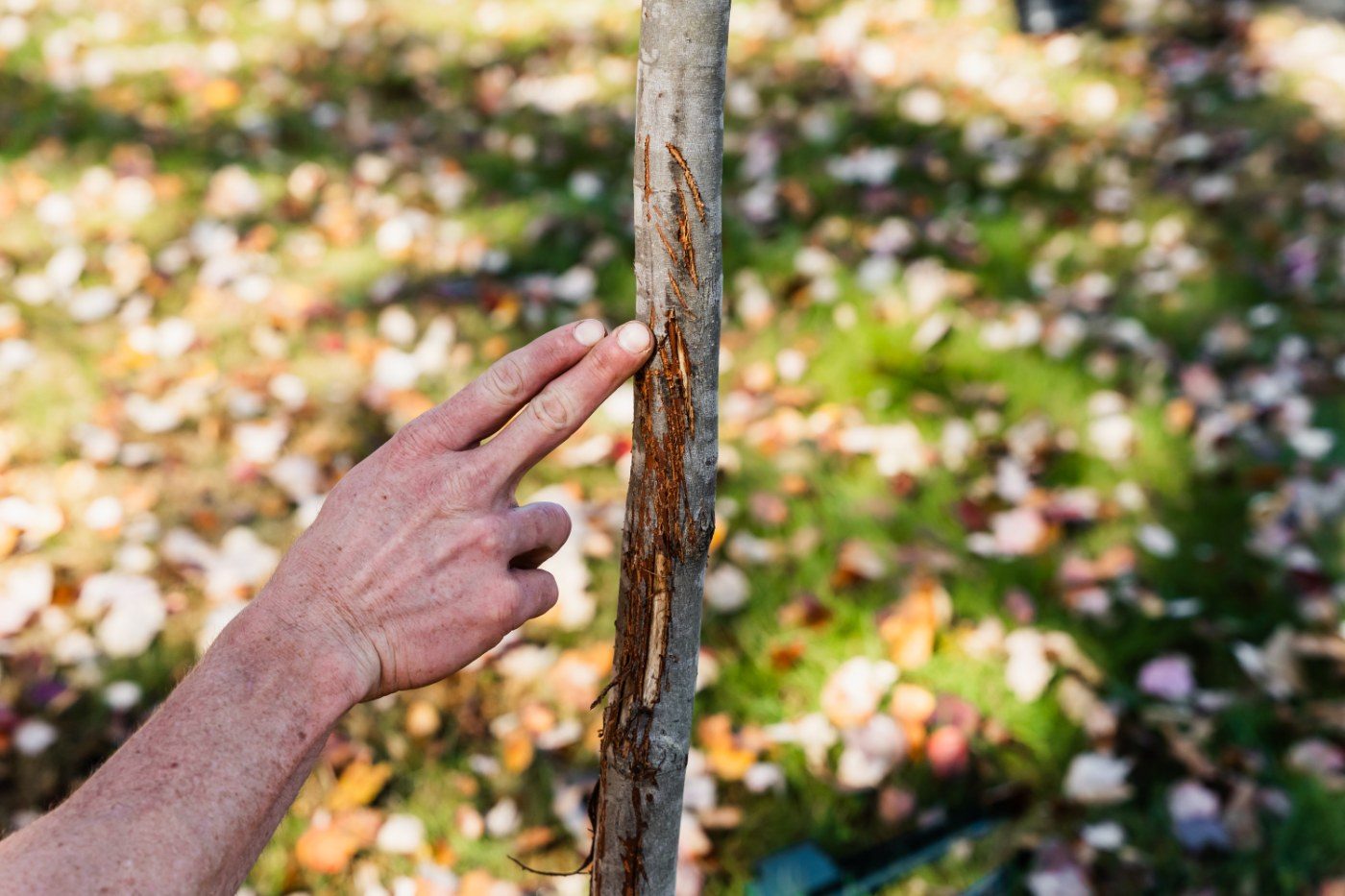
- In fall, bark shredded off the trunk of a young tree from ground level to about three feet up, sometimes with the wood underneath gouged.
That's antler damage, also called buck rub, and it's the one that kills trees. Any of these means the deer have found your yard and will be back.
See Our Deer Protection in Action
Watch our Certified Arborists spray repellent and install protective fencing on real properties in our service area.
How to Protect Trees from Deer with Repellent Spray
Deer Repellent Spray works by making your trees and shrubs taste bad. The products we use create a bitter or spicy barrier on the foliage, so when a deer tries to browse, it gets an immediate, unpleasant taste and moves on. Deer are creatures of habit. Once your property stops rewarding them, they take it off the route.
Growing Season Deer Repellent Service
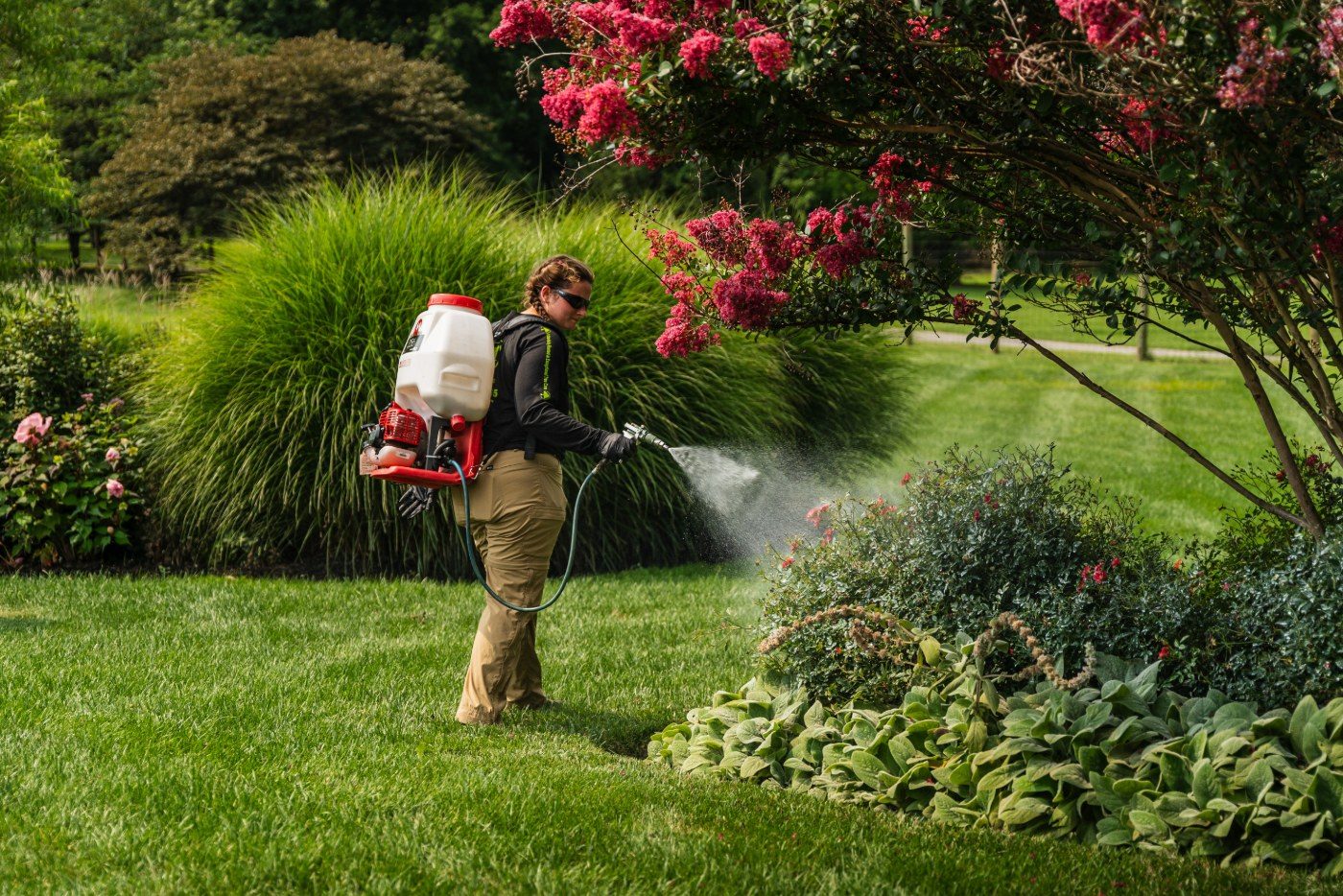
Spring and summer are when tender shoots, blooming flowers, and new leaves are most attractive to hungry deer. Browsing now sets back plant health, ruins curb appeal, and wastes the money and effort you've put into your landscape, so this is the season to be proactive about deer control.
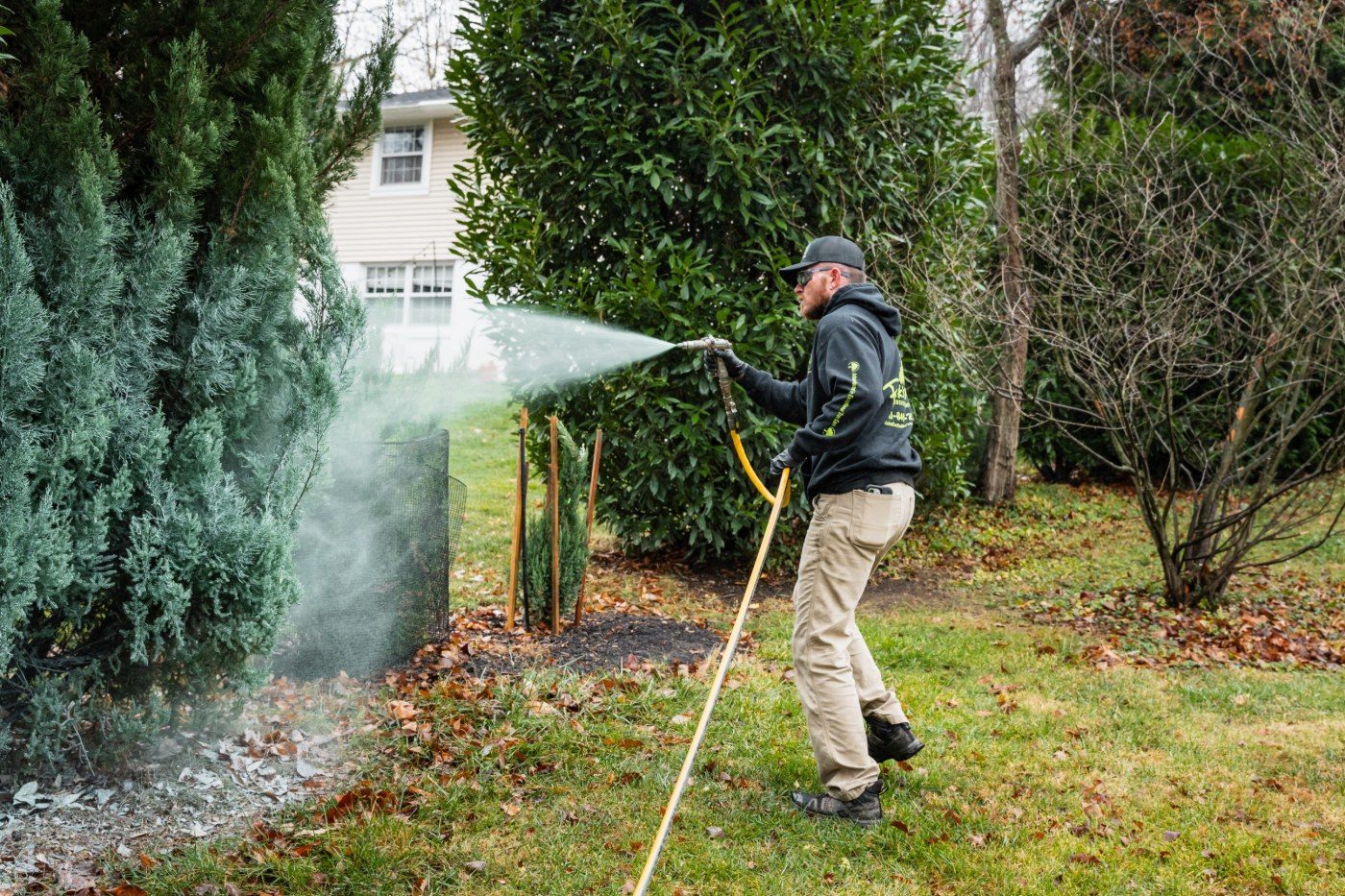
For the growing season, we use DeerPro Spring/Summer with Thiram, the best spray protection available, offering 4 to 6 weeks of sustained, weather-resistant control per application. Beyond deterring deer, it helps plants retain moisture and improves drought resistance through the hotter months. For homeowners who want a more natural option, we also offer DeerPro with Capsaicin, which uses a hot pepper taste barrier instead of Thiram and holds up through rain and irrigation. The tradeoff is duration, about 3 to 4 weeks per application, so it needs to be applied more often to keep the same level of protection. A Certified Arborist will recommend the right product for your plants, and either way we apply it on a recurring schedule timed to how aggressively your plants are pushing new growth.
Dormant Season Deer Repellent Service
When food is scarce in winter, deer turn to winter diet plants like Arborvitae, Holly, Yew, and Rhododendron, stripping branches and buds to survive, right when dormant plants are least able to recover. For the dormant season, we use DeerPro Winter, a professional-grade, Thiram based repellent that forms a long-lasting coating and makes winter diet plants unappealing to deer without harming them. One application in the fall provides season-long protection, even through harsh winter weather, so your landscape comes through winter intact.
When Fencing Makes More Sense Than Spray
Spray is the right answer for most properties, but it's a recurring service. The growing season alone means a visit every few weeks from spring through summer, and some homeowners would rather make a one-time investment than commit to that schedule. For them, protective fencing does the same job against browsing. Deer can't eat what they can't reach, and a fence doesn't wash off, wear off, or need reapplying.
Fencing is also the only answer for antler damage. From September through December, bucks rub on young, smooth bark trees to shed velvet and mark territory, tearing away the bark and the living tissue beneath it. A tree rubbed hard enough, or two falls in a row, is girdled and lost. No spray prevents that. A physical barrier does.
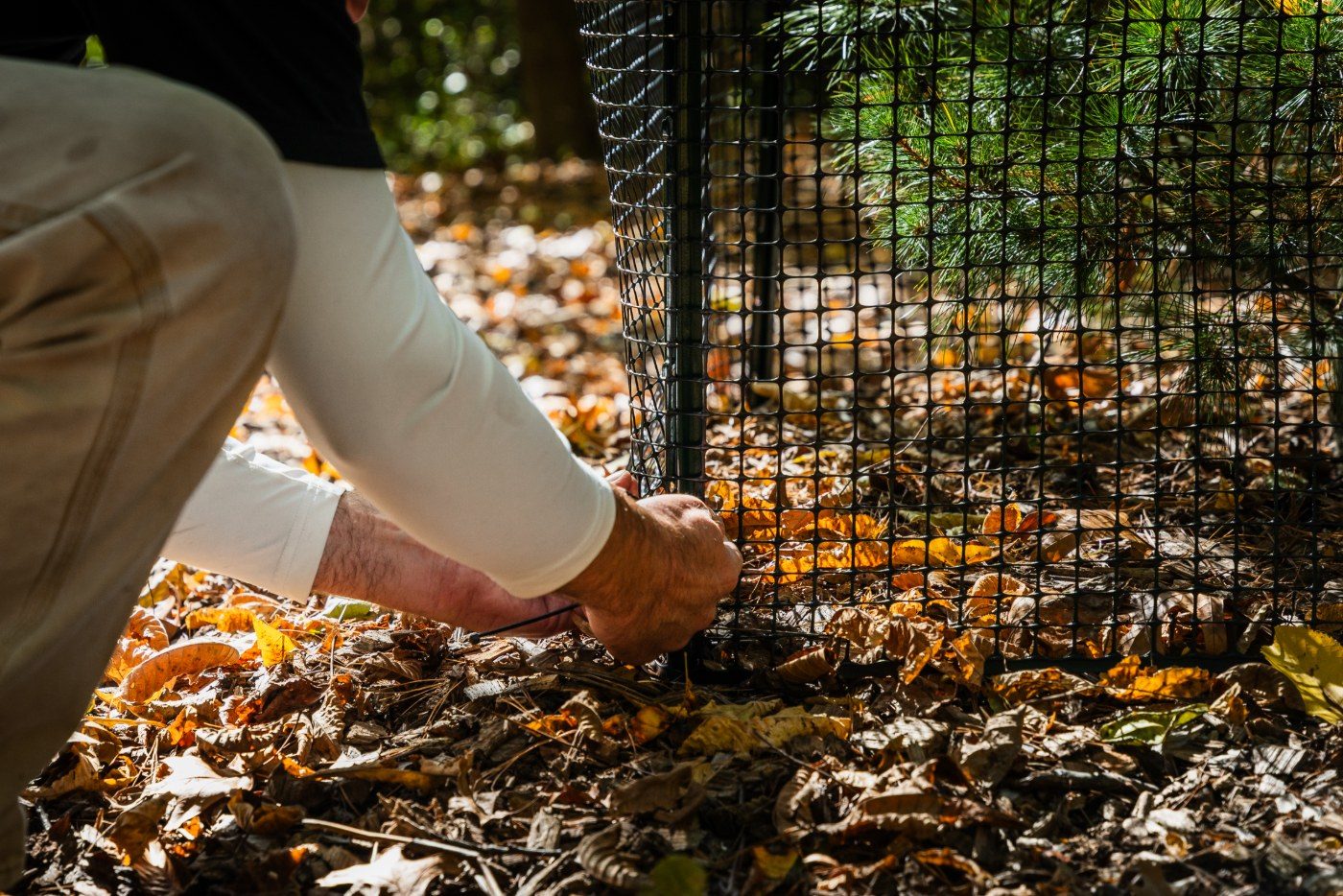
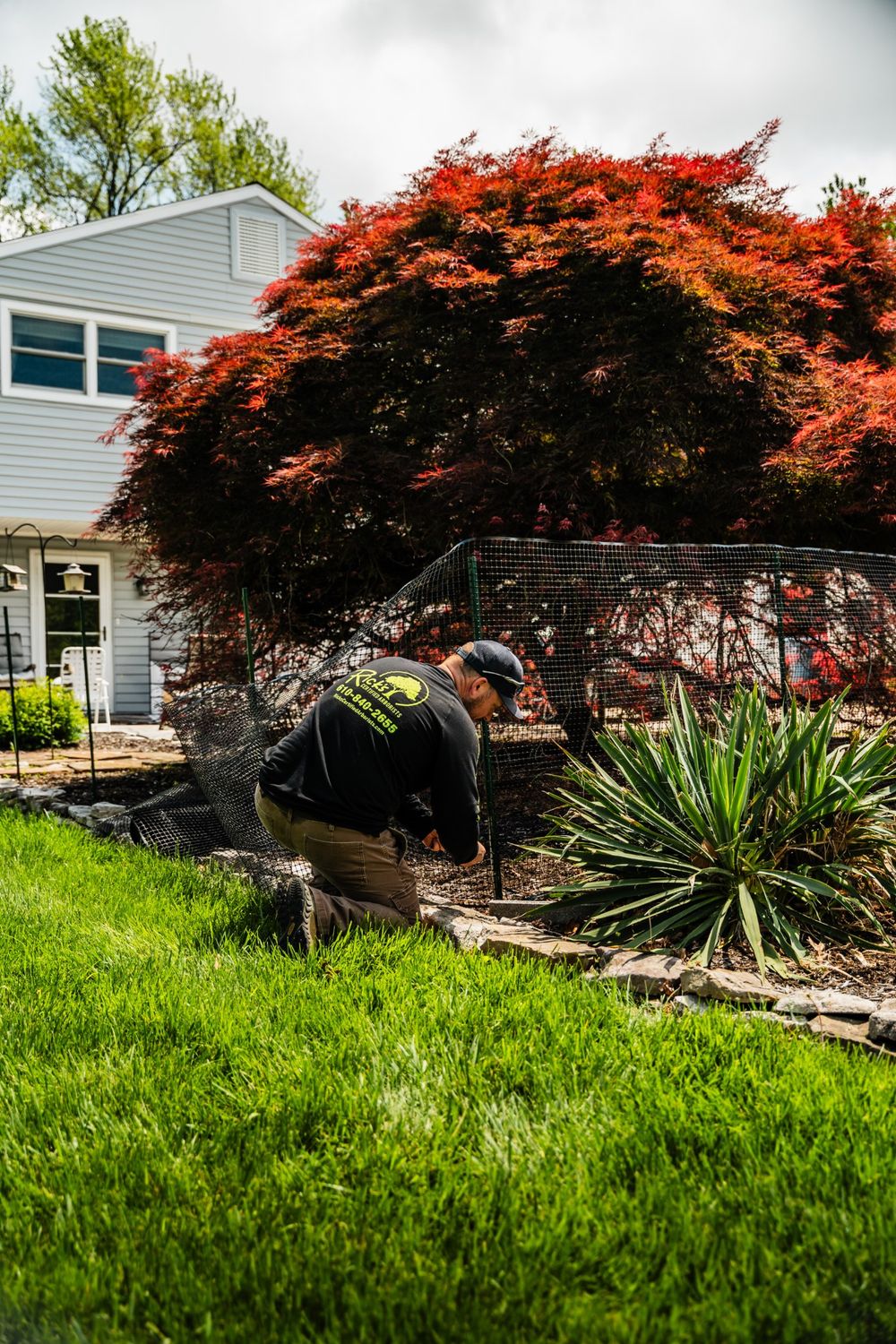
We install protective fencing around individual trees and vulnerable plantings in 4-foot and 6-foot heights, staked and secured so deer can't push through, reach over, or get an antler on the trunk. It costs more up front than a spray, and it works every day of the year. Many of our customers run both: spray for the shrubs and screening plants, and fencing for the young trees that need tree trunk protection from deer.
Looking for Deer Spraying Companies? Here's Why You Can Trust Us
Deer deterrent spray looks easy to apply on your own. We've heard from plenty of homeowners who tried it, sprayed every weekend, and still lost their Arborvitae. The results are what's hard. Here's why they hand it to us:
We use professional-grade sprays
One application of DeerPro Winter protects your trees and shrubs through the colder months, and recurring applications of DeerPro Spring/Summer, with Thiram or the more natural Capsaicin formula, cover the growing season. Neither is available at the hardware store.
We know when to spray, and when to fence
Deer feeding habits change with the seasons. We time applications for spring and summer when deer target tender new growth, and again in fall before they switch to winter diet plants. Fencing goes up in late summer, before the rut starts and the antler damage begins. Protect at the wrong time and you've paid to protect nothing.
We know what is most vulnerable
Different plants are at risk at different times: new shoots, green leaves, and herbaceous plants in the growing season, Evergreens and hard browse in the cold months, and any young tree with a smooth trunk once the bucks start rubbing. A Certified Arborist decides which plants on your property get sprayed, which trees get fenced, and when, not a technician working off a checklist.
How Deer Protection Works at Rick's
1.Tree Health Evaluation.
A Certified Arborist walks your property, identifies which plants the deer are hitting and which young trees are at risk of antler damage.
2.Your plan.
Spray, fencing, or both, matched to your plants and how much you want to invest.
3.Timed protection.
We apply growing season spray on a recurring schedule, dormant season spray once in the fall, and install fencing before the rut.
4.Ongoing care.
Your deer protection folds into a Tree Preservation Program so the same Arborists keep watching your landscape.
What Your Neighbors Say
“Reliable, prompt and courteous. Cameron and Troy did a terrific job setting up deer fencing and spraying bushes with deer repellent. Highly recommended.”
Frequently Asked Questions
For browsing: Arborvitae, Yew, Holly, Rhododendron, Azalea, Hosta, and Hydrangea top the list. For antler damage: any young tree with a trunk one to four inches across and smooth bark, which describes most newly planted trees.
A Certified Arborist evaluates which plants on your property are at risk and when. In the growing season, we apply DeerPro Spring/Summer on a recurring schedule. In the dormant season, we apply DeerPro Winter once in the fall. For young trees at risk of antler damage, we install protective fencing.
Repeated browsing removes the buds and foliage a plant needs to grow, so it never fills in and stays under constant stress. Young trees can be stunted for years or lost outright.
Antler damage, or buck rub, is bark torn off a trunk by a male deer rubbing his antlers in fall. A light rub on one side can heal over. A rub that goes most of the way around girdles the tree, cuts off the flow of water and nutrients, and usually kills it. Prevention is the only real answer, which is why we fence young trees before the rut.
By plant, by season, and by pressure. Which species are on your property, how heavily the deer are hitting them, whether the risk is browsing or antler damage, and what else is going on with the plant's health. That's why deer protection is part of a Tree Health Evaluation and not a standalone spray.
Dormant season spray goes on in the fall before winter feeding starts. Growing season spray starts when new growth pushes in spring and continues every few weeks. Fencing goes up in late summer, ahead of the rut, so it's in place before the first antler damage.
More Tree Preservation Services
Deer protection is one piece of keeping your landscape healthy. Our Tree Preservation Programs also include Deep Root Fertilization, Growth Regulation, Soil Injections, Trunk Injections, and more, all managed by the same Certified Arborists. Ask about the Tree Preservation Membership.
Tree Protection from Deer Available in Your Area
We're proud to serve:
- Avondale
- Berwyn
- Boyertown
- Chadds Ford
- Chester Springs
- Coatesville
- Collegeville
- Concordville
- Devon
- Downingtown
- Eagleville
- Exton
- Garnet Valley
- Gilbertsville
- Glen Mills
- Glenmoore
- Harleysville
- Haverford
- Havertown
- Kennett Square
- King of Prussia
- Landenberg
- Malvern
- Media
- Norristown
- Paoli
- Parkesburg
- Perkiomenville
- Phoenixville
- Pottstown
- Royersford
- Spring City
- Villanova
- Wayne
- West Chester
- Wilmington
Save Your Trees and Shrubs with Our Deer Repellent Service
Picture your Arborvitae full to the ground in March. Your Hollies still holding their berries. The Maple you planted three years ago with clean bark and a straight trunk. That's what deer protection buys you, and it costs a fraction of replacing what the deer take.
We provide Deer Repellent Service and protective fencing throughout Chester, Delaware, and Montgomery Counties and northern New Castle County, DE.