

Written by Rick’s Certified Arborists
Reading time: 7–8 minutes
As winter descends upon the picturesque landscapes of Pennsylvania, one annual vexation troubles arborists and homeowners alike: deer that damage trees. Yes, those seemingly placid, doe-eyed creatures that add a touch of wilderness to your backyard have a notorious penchant for dining on your beloved trees.
Instead of grappling with the infuriating aftermath of gnawed bark, stripped stems, and mangled branches, why not prepare some tree protection from deer? As the go-to tree service in West Chester, Montgomery, and Delaware County, plus Northern Delaware, the team at Rick’s Certified Arborists is here to share our expertise.
Why Do Deer Damage Trees, and Why Is It Getting Worse?
Deer damage trees for two main reasons: they need food or they’re marking territory. Fall and winter bring out their worst behavior. And since natural habitats keep shrinking while deer populations grow, your lawn has basically become their late-night buffet.
Common Types of Deer Damage to Trees:
Browsing: Deer eat buds, twigs, and leaves, mostly during winter when other food sources are scarce.
Bark Stripping: Deer chew bark to reach the cambium layer underneath, which contains nutrients and sugars.
Rubbing: Bucks scrape their antlers against trunks to shed velvet and mark territory, creating vertical damage to the bark.
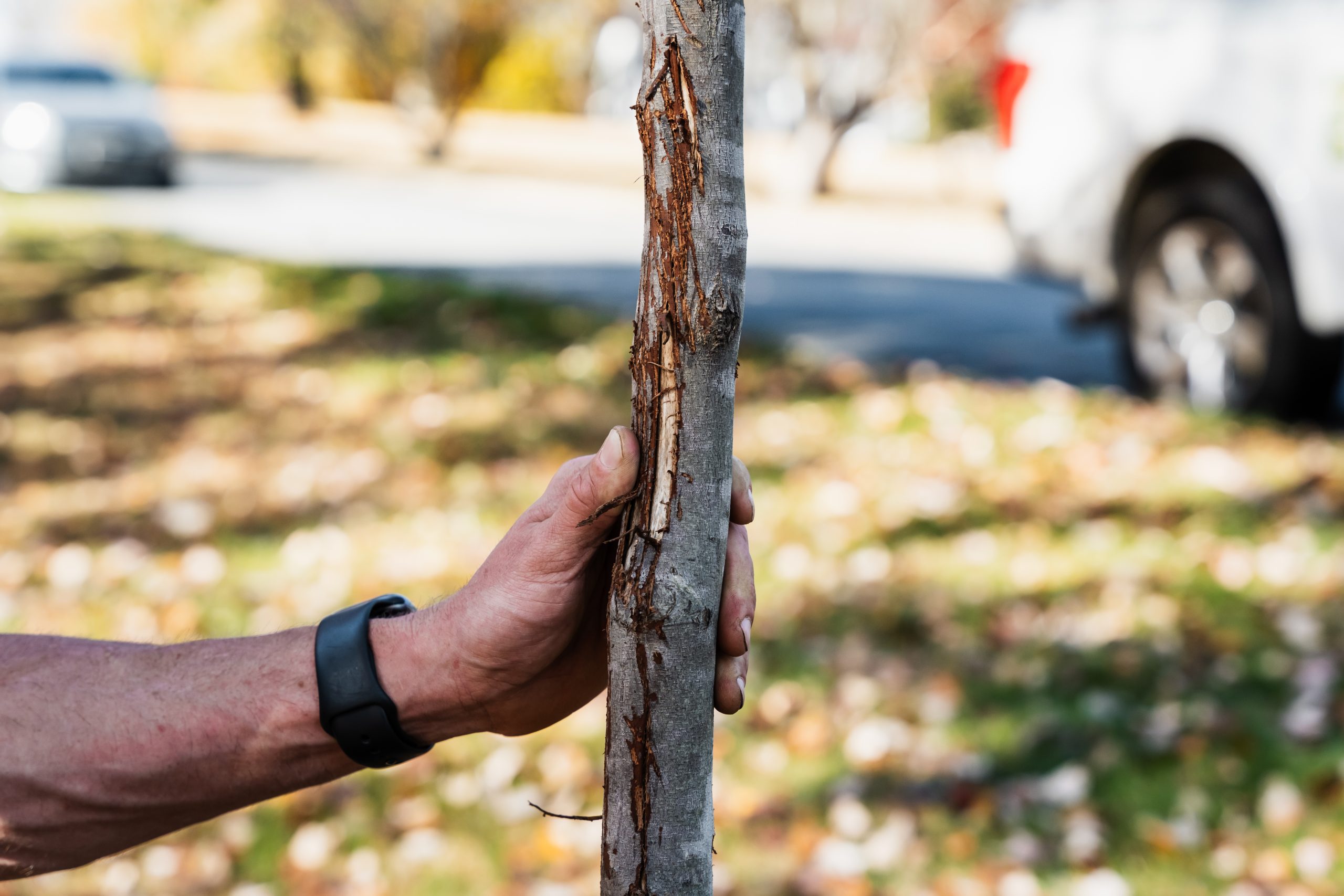
What Are the Signs of Deer Damage on Trees?
Forewarned is forearmed. Use this handy checklist to identify if your specimens are the victim of a deer’s gourmet adventure:
- Stripping bark, especially at a height of up to four feet
- Mangled branches
- Browsing line, a visible demarcation where lower foliage appears bare and higher parts remain untouched
- Deep, torn gouges in tree trunks
- Hoof prints
- Small, pellet-like droppings
How to Protect Trees from Deer
Physical Barriers
Snow fencing makes a fantastic first line of defense that keeps those wandering herbivores away from your precious greenery. Set up a high border (about eight feet tall) to dissuade leaping attempts by adventurous deer.
If you prefer something less visually intrusive, you could opt for individual wraps and guards. They’re affordable, effective, and relatively easy to install.
Just make sure cages are wide enough that deer can’t reach through or over the top. For smaller yards, tree guards are easier to manage. Check them seasonally to avoid moisture buildup or insect problems.
Chemical Deterrents
Look for deer repellents in your local gardening store. These products operate on two premises: they either smell repulsive to deer or impart an unpleasant taste to the plants, discouraging future nibbling. Remember, deer are smart creatures, and they can grow accustomed to the smell or taste over time. Keep rotating between different brands to maintain their efficiency. You should also reapply after heavy rain or snow to protect your trees from significant damage.
As for professional-grade repellants, we use DeerPro® Winter and DeerPro® Spring/Summer for reliable, season-specific protection. Contact us to get a quote.
Plant a Hardy Garden from the Start
Outsmart your local wildlife with a bit of horticultural cunning! Incorporate young trees and shrubs that our hoofed invaders find less appealing, like:
- Snapdragon
- Lambs Ear
- Spirea
- Boxwood
- White Spruce
- Dragon Lady Holly
Plant these species along property edges as buffers. While these varieties are not completely deer-proof, they certainly tip the scale in your favor.
Eliminate Potential Food Sources
Minimize animal attraction by clearing out tempting nibbles from your yard. This includes compost containers, bird feeders, and fallen fruit; a cleaner yard equals fewer visitors! If you can part with them, consider removing nearby vegetation that herbivores love, like hostas, daylilies, and geraniums.
Protecting Trees from Deer Rubbing, Specifically
Fencing is the most reliable way to protect trees from deer rubbing during the fall rutting season. For young or high-value trees, prioritize fencing around the planting area before deer activity increases. Mesh or woven wire fencing is the most widely used option.
Other Ways of Protecting Tree Trunks From Deer Rubbing:
- Plastic mesh guards – Lightweight and allow good airflow
- Spiral tree wraps – Easy to install and adjust as needed
- Vinyl trunk protectors – Durable and hold up well in weather
Wrap the lower 4–5 feet of the trunk, and make sure the guard fits snugly but still allows for air circulation.

Seasonal Protection Steps You Can Take
Deer activity peaks in late winter and early spring when natural food is scarce, making trees most vulnerable then.
- Growing Season (Spring & Summer): Apply repellents regularly and monitor for browsing on new growth. Tender shoots and leaves attract deer the most during this period.
- Dormant Season (Fall & Winter): Install trunk guards and apply a professional-grade winter repellent before peak rubbing season. A single, well-timed application can help defend trees all winter long.
- Year-round: Watch for signs of pests, stress, or disease to catch problems early and adjust protection as needed.
Frequently Asked Questions About Tree Protection
What’s the best way to protect young trees from deer rubbing?
Install fencing to create a physical barrier around the trees. A properly built fence keeps deer from reaching the trunks altogether, thus preventing rubbing damage before it starts.
How tall should a deer fence be to protect trees and shrubs?
Fences should be at least 4 feet tall around trees and shrubs for reliable protection.
Which trees are most vulnerable to buck rub?
Newly planted trees with exposed trunks are the most at risk, along with Magnolia Trees, which deer often target during the fall rut.
Are deer repellents safe for pets and the environment?
Most commercial repellents are safe when used as directed. Look for biodegradable or organic options and follow the label instructions.
Are There Eco-Friendly Ways to Deter Deer?
Yes, you can protect your trees using environmentally responsible methods and products like biodegradable repellents, native landscaping, and low-impact fencing. Sustainable approaches often work just as well as conventional products, plus they support the local ecosystem.
Save Your Trees
Save your trees with the right combination of protection tactics. Most importantly, start early, stay consistent, and adjust your approach as conditions change. Deer behavior varies by season and location, so what works in one yard may need to be adapted for another.
If you’re not sure where to start or need help identifying existing damage, our team at Rick’s Certified Arborists has extensive experience with deer-related tree issues throughout Pennsylvania. We can design protection strategies that work for your specific property, or handle the protection for you with our professional Winter Deer Repellent Services. Check out our full range of tree care services for Chester, Montgomery, and Delaware Counties, as well as Northern DE, and then contact us to get a free quote.
