

Winter doesn’t mean your trees are safe. Across Chester, Montgomery, and Delaware Counties, plus Northern Delaware, deer are actively foraging through landscapes, and your trees may be paying the price.
Unfortunately for property owners, most of the damage done by deer in the winter goes completely unnoticed until spring arrives. The good news is that you don’t have to wait and wonder, and there are several proactive steps you can take to protect trees from deer in the wintertime.
Read on to learn about the impact deer can have on your trees, plus our top tips for preventing deer damage in the winter and helping your landscape thrive.
How Deer Damage Trees
Deer may seem like graceful visitors to your property, but their impact on trees can be severe and lasting.
Antler Damage
During rutting season, bucks seek out young trees to rub their antlers against, causing serious structural damage. This can happen in several ways:
- Bark stripping which exposes the cambium layer (the living tissue responsible for transporting water and nutrients throughout the tree).
- Girdling, which occurs when rubbing encircles the trunk. Once girdled, a tree cannot recover and will eventually die.
- Partial bark damage creates permanent weak points and makes trees vulnerable to breakage during storms.
- Open wounds that invite pests and diseases known to target compromised bark.
Browsing
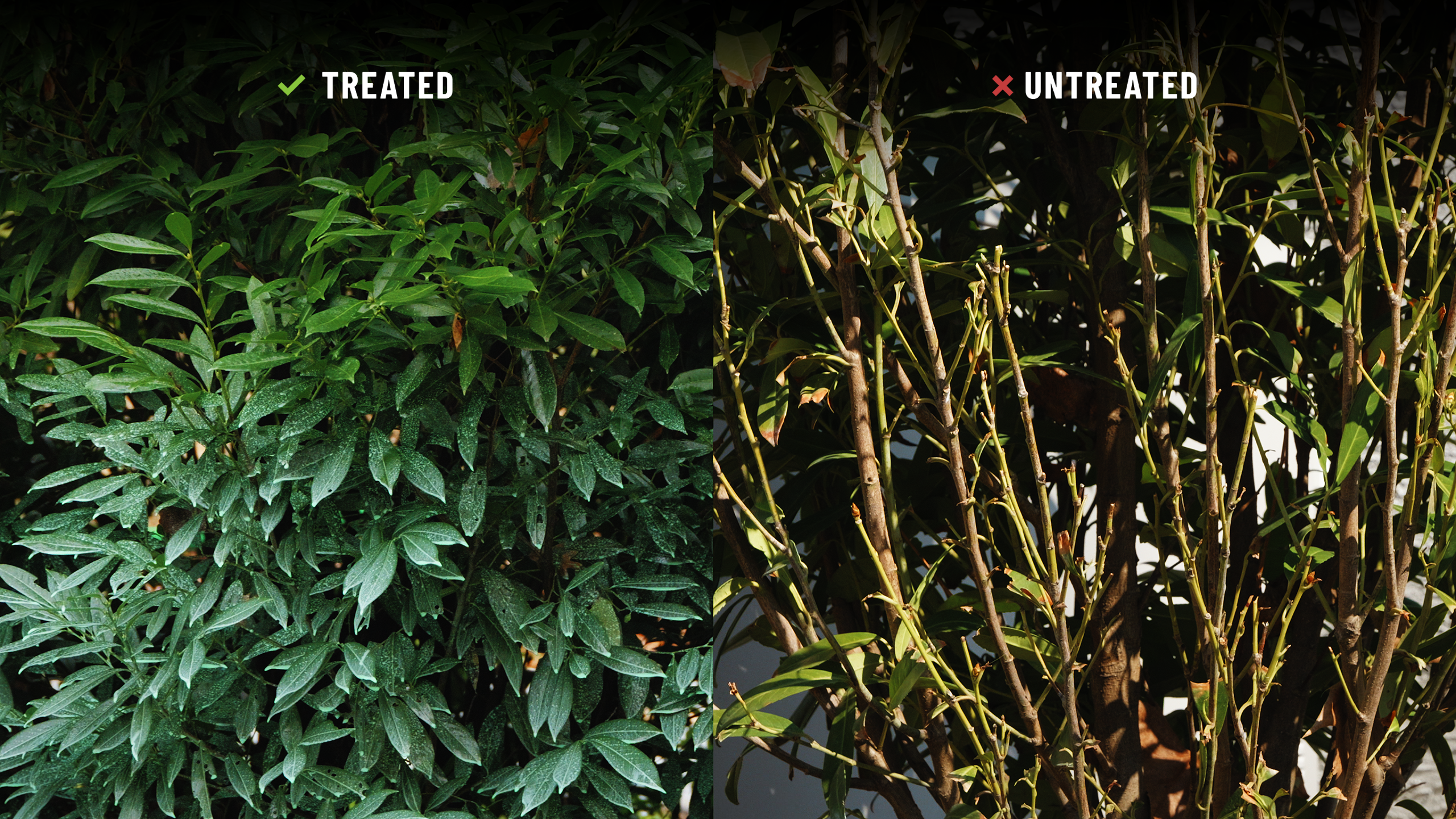
When natural food sources become scarce in winter, deer browse on twigs, buds, and sometimes tender bark on young trunks and lower branches. They may also nibble away at the foliage of evergreens and ornamentals. Trees such as Holly, Arborvitae, Rhododendron, Azalea, Pine, Cypress, and Viburnum are frequent targets of this behavior. The loss of buds is especially problematic with browsing, since a lack of buds leads to bare branches and a depleted energy supply.
Potential Long-Term Impact on Your Trees’ Health
The consequences of deer damage extend far beyond the winter months. Trees that have been repeatedly browsed or rubbed enter a state of chronic stress, directing energy toward wound response rather than healthy growth. This weakened condition makes them significantly more vulnerable to diseases and insect infestations. Then, over time, all of this cumulative stress shortens the tree’s lifespan.
Why Deer Damage Gets Worse Before Spring
If you think deer activity will slow down as winter ends, we’re sorry to say that the opposite is true. Late winter and early spring represent some of the most critical periods for deer browsing, and for a number of reasons:
- Natural food sources reach their lowest point after months of winter foraging
- Tree buds become attractive to deer as they swell with sugars and nutrients
- Deer actively seek nutrition to support the fawning season ahead
Unfortunately, there’s no way to restore lost buds, which means reduced canopy development and slower growth throughout the entire growing season. Therefore, prevention strategies are your best bet.
How to Stop Deer from Eating Trees
There are several ways to protect trees from deer, though not all are equally practical or effective for long-term tree preservation.
Physical Barriers
Installing tree wraps around individual trunks or surrounding valuable specimens with snow fencing can prevent deer from accessing bark and branches. For small properties with just a few trees, trunk guards work reasonably well. Fencing must be tall enough (at least four feet) to make sure deer can’t reach over to feed, and it must be maintained regularly to remain effective.
Chemical Repellents
You’ll find various deer repellent products in your local garden store. These products work by making trees smell or taste unpleasant to deer, thereby discouraging future nibbling. However, deer are resilient and can gradually come to accept the smell or taste. For best results, rotate between repellants and reapply after snow or rain.
When to Protect Trees From Deer
The most effective window for protection is late fall through early spring, precisely when food becomes scarce, and deer get hungry. This preventative approach is especially critical for young trees, which lack the established root systems and energy reserves to recover from repeated browsing.
High-value privacy trees warrant particular attention, as deer will feed on them throughout winter when alternative food sources are limited.
To Best Protect Trees From Deer, Call in the Pros
Protecting your trees from the local deer population is a lot easier with a professional by your side.
Professional Deer Repellent Services use targeted deer repellent spray for trees (DeerPro® Winter, specifically) that are formulated to deter browsing and rubbing while withstanding winter weather conditions. These commercial-grade formulations last significantly longer than retail products, and provide consistent protection during the peak browsing months when your trees are most at risk.
With professional application of deer repellent, you get complete coverage of vulnerable areas at the proper concentration, eliminating gaps that deer might exploit. Perhaps most importantly, professional Deer Protection is applied at precisely the right time in the seasonal cycle by Certified Arborists who understand deer behavior patterns and can time applications to provide maximum effectiveness when trees need it most.
Preserve Your Trees with Rick’s Certified Arborists
Your trees represent a significant investment in your property’s beauty, value, and environmental quality. And the coming weeks offer a narrow window to establish protection before spring growth begins in earnest and browsing pressure reaches its peak.
If deer are damaging your trees, professional Deer Protection from Rick’s Certified Arborists can help preserve their health and structure through the most vulnerable period of the year. Request a Quote today and give your trees the defense they need to stand up to deer and sprout abundant fresh growth in the spring.
