
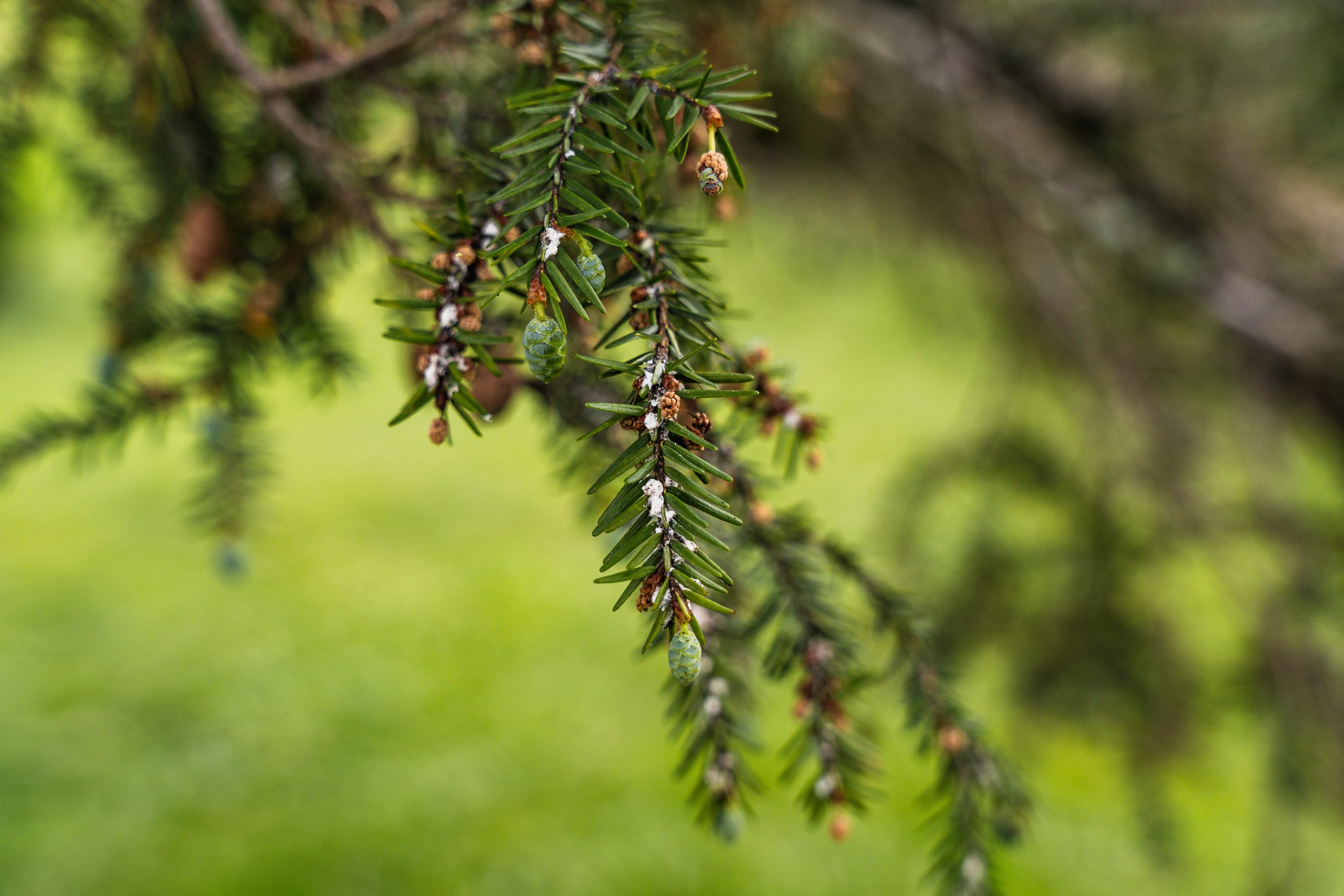
If you have Hemlock Trees on your property, you probably have heard about Hemlock Woolly Adelgid. First discovered in Pennsylvania in 1967, these tiny sap-sucking insects have infected, weakened, and decimated a huge number of the eastern hemlock trees in the state.
This invasive pest has wreaked havoc in over three counties in the state, threatening to drive the Carolina Hemlock and Eastern Hemlock species to extinction. All is not lost, though. In this post, we delve deeper to learn more about Hemlock Woolly Adelgid and how to deal with it, as advised by one of Pennsylvania’s leading providers of Residential Tree Care and Inspection services.
Identifying Woolly Adelgid – Common Infestation Signs and Symptoms
While Woolly Adelgids can infest all species of Hemlock trees, they’re most unforgiving to the Carolina and Eastern Hemlock. These pesky insects target fresh growth, and you’ll often find them at the bottom of your tree’s needles.
Once they hatch from eggs, they start feeding on sap. This drains the tree’s stems and needles, eventually killing the entire branch. The whole tree may also die in the end.
Hemlock Woolly Adelgid can quickly spread from one tree to the next by wind or animals that come in contact with it, but how do you know you have an infestation?
Look out for the following common signs and symptoms:
- You notice brownish-orange eggs in spring.
- The eggs hatch into minute brown crawling insects by early summer. The reddish-brown insects are less than 1/16th-inch long.
- They create woolly-like white nests that mimic tiny cotton balls.
- You see tiny white nodes on the bottom side of your tree’s branches.
As the temperatures rise in summer, the Woolly Adelgids become inactive. They’ll return in the fall and start feeding again. Additionally, an Adelgid-infested Hemlock will often turn from a shiny dark green to a greyish-green color.
Hemlock Woolly Adelgid Treatment Options
You have several chemical and natural treatment options when it comes to dealing with this invasive pest. Let’s explore some of the options:
Chemical Treatments
For larger, established Hemlocks, systemic treatments generally work better. A professional can apply insecticides as a Soil Drench or Basal Bark application around the base of the tree, or by injecting them directly into the trunk so the product moves through the tree’s vascular system. At Rick’s, our preferred approach is a soil application of Imidacloprid, which has given our West Chester customers 3–5 years of control from a single treatment.
Insecticidal Soaps and Horticultural Oils
These foliar spray options are often less toxic and easier on the environment than many traditional insecticides, but they still must be used carefully and never near streams, ponds, or other water sources. Because they work on contact and leave little residual protection, they require thorough coverage of the entire canopy and periodic re-treatment. For this reason, they are usually most practical for smaller landscape Hemlocks. Medium to large trees are generally not good candidates for this approach.
Biological Control
In some areas, biological control programs release predatory beetles such as Pseudoscymnus (now often called Sasajiscymnus) Tsugae that feed on Hemlock Woolly Adelgid. These natural enemies are introduced and monitored by agencies or specialized cooperators rather than individual homeowners, but over time, they can help reduce Adelgid pressure as part of a broader, integrated management approach.
How Much Does Woolly Adelgid Treatment Cost?
The cost to treat Hemlock Woolly Adelgid in Pennsylvania depends on the size and number of your trees, how advanced the infestation is, and which treatment option your specialist recommends. Soil drenches, trunk injections, and horticultural oil or insecticidal soap sprays are all priced on a per‑tree basis, and larger or heavily infested trees typically cost more to treat. The best way to get an accurate estimate is to schedule an on‑site evaluation with an Arborist.
When Is the Best Time to Treat?

Timing your treatment for Woolly Adelgid is just as important as choosing the right method. In Pennsylvania, the most effective windows generally align with the adelgid’s active periods and the tree’s ability to move systemic products.
- Fall (roughly October through early November): A good time for systemic Soil drenches or Foliar oil sprays, because Hemlocks can continue to take up product as long as the soil is unfrozen and moist, with protection building over the following months.
- Early spring (roughly March through April): Another strong window for systemic applications, basal bark sprays for fast-acting results, and horticultural oil or insecticidal soap sprays, as Adelgid crawlers and feeding stages are active.
Late fall is the right time to apply soil drenches because the tree continues to absorb the insecticide through the cool season, allowing the product to move into the canopy before adelgid populations surge again. For contact products like oils and soaps, the best results come when you target the crawler stages during early spring and again in early fall, and only when weather conditions (temperature and moisture) are within label guidelines.
Contact Your Local Tree Experts for Assistance
The best way to treat any tree disease or infestation is by contacting a local tree expert.
If you need help dealing with Hemlock Woolly Adelgid and their unsightly egg sacs, Rick’s Certified Arborists is your go-to local arborist in Chester, PA. Contact us at 484-699-0537 to request a quote and schedule an appointment with a qualified Tree Pest Control Specialist today!
